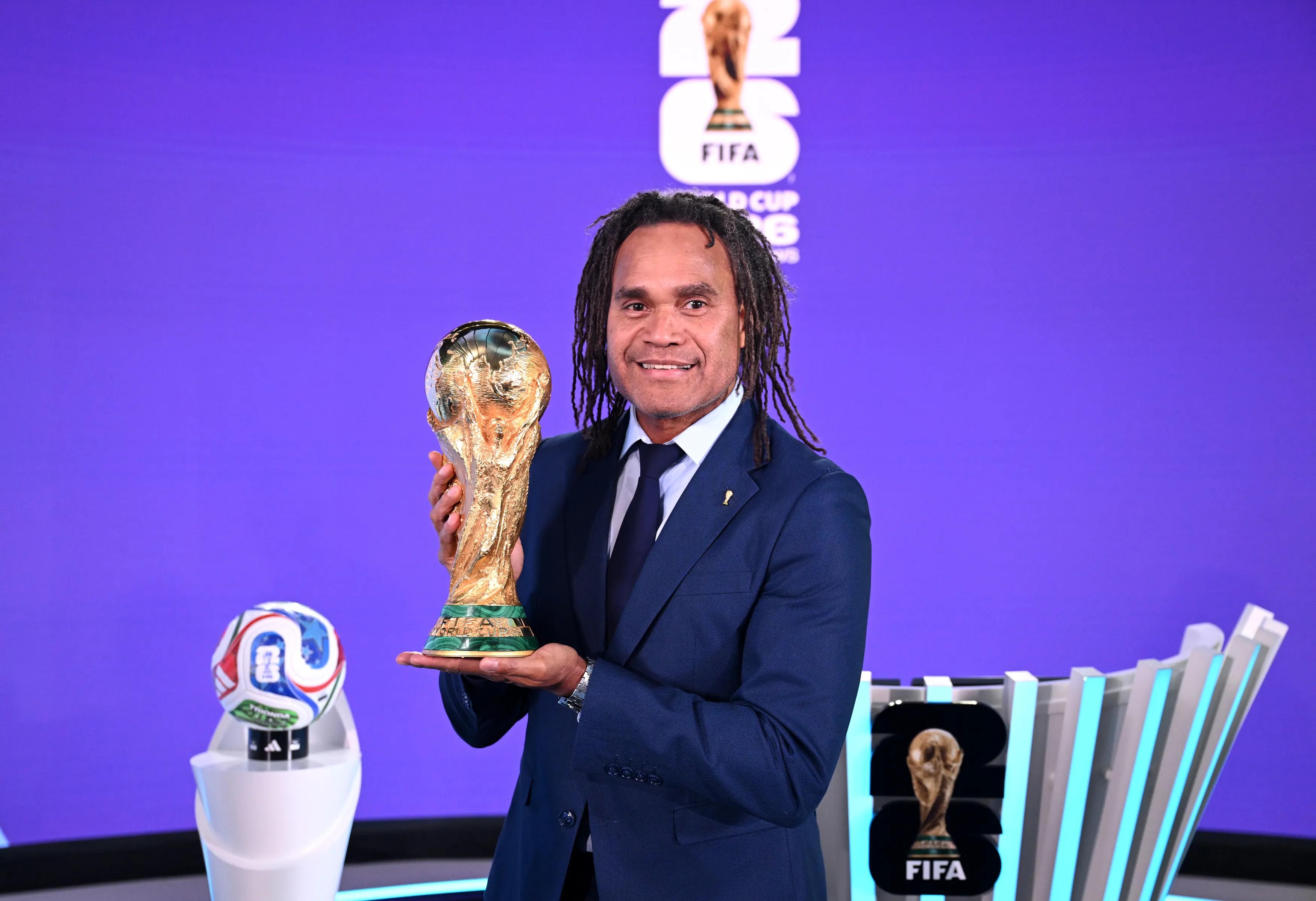
The distance between a remote Pacific island and football's grandest stage is measured not in miles, but in dreams. Christian Karembeu crossed that distance in little more than a decade, turning childhood wonder into an achievement that still sounds like fiction. Appearing on the FIFA Podcast alongside presenter Mikael Silvestre, the 1998 World Cup winner traced his journey back to New Caledonia, a French Overseas Territory in the southwest Pacific, during the 1986 tournament in Mexico. A fifteen-year-old Karembeu sat transfixed by France's quarter-final against Brazil, a match decided by penalty kicks that remains his favourite World Cup encounter to this day. The communal viewing experience was unlike anything modern fans would recognise. Back then the territory had one television, and as a mark of respect he watched from behind his tribal elders, craning his neck to catch the action and asking who was scoring. When France played, entire villages would wake in the middle of the night, every tribe and city united around the screen. The poetry of what followed is almost impossible to believe. Twelve years later, that same star-struck boy walked out for France against Brazil in the 1998 World Cup final, battling Dunga and Leonardo in midfield as Les Bleus stormed to a 3-0 triumph. Karembeu also revealed a deeply personal thread connecting the two finals, a detail that makes the story even more extraordinary. From a single village television to the centre circle at the Stade de France, his path embodies the magic that keeps the world watching this tournament generation after generation. Karembeu also spoke of the sacrifices along the way: the years of separation from family, the leap of faith required to move to mainland France as a teenager, and the stubborn belief that a boy from the Pacific could one day wear the famous blue shirt. Each obstacle only deepened his gratitude when the moment finally arrived. The 1998 triumph was shared by a nation, but its roots stretched back to that communal screen in New Caledonia, where elders and children alike discovered that football could unite tribes and transcend geography. Today, as young players from similarly remote corners of the world dream under floodlights, Karembeu's story remains the ultimate answer to anyone who asks whether the World Cup truly belongs to everyone.
🔥 Headlines
How does a boy watching on a single village television become a World Cup champion?