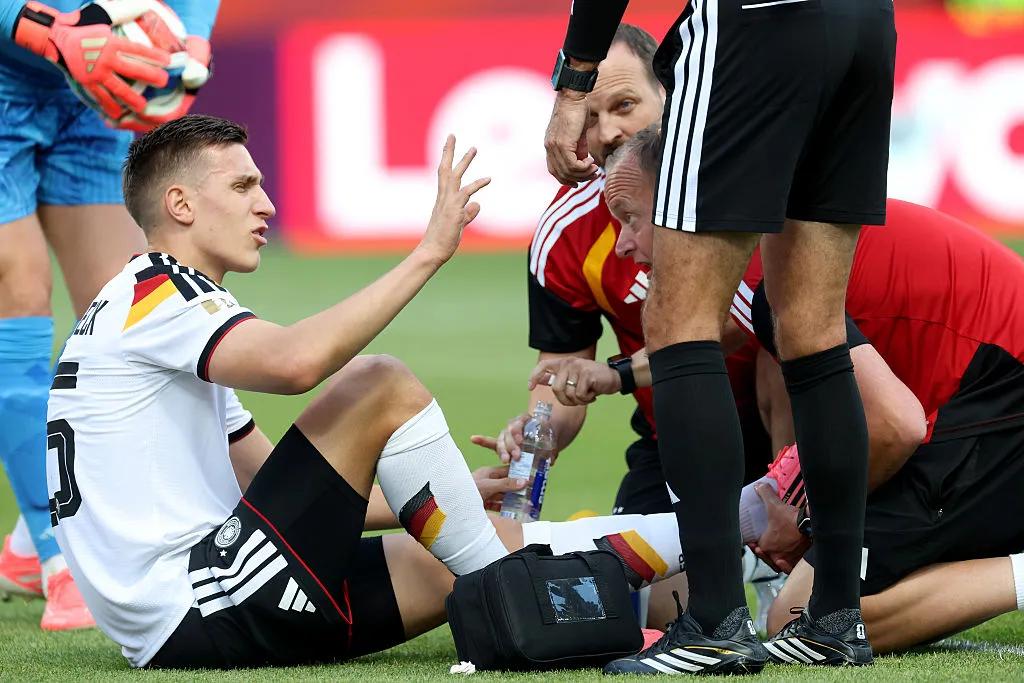
Could one mistimed challenge shatter an entire nation's defensive plans in the blink of an eye? Germany received a sobering answer during their 2-1 win over Côte d'Ivoire, when Nico Schlotterbeck went down with an ankle injury that has ended his FIFA World Cup 2026 campaign before it could truly begin. The Borussia Dortmund centre-back had been central to Julian Nagelsmann's plans, a player whose comfort on the ball and ability to initiate attacks from the back were supposed to give Die Mannschaft a modern edge in North America. Instead, the twenty-six-year-old now faces the cruel reality of watching the remainder of the tournament from the sidelines, a fate made all the more poignant by his decision to remain with the squad rather than return home. Nagelsmann did not hide the scale of the blow, describing Schlotterbeck as an outstanding defender whose build-up play would be sorely missed, but he also expressed faith in the alternatives at his disposal. Jonathan Tah, Antonio Rudiger, Waldemar Anton, and Malick Thiaw now find themselves thrust into sharper focus, each capable of stepping in but none able to replicate the precise blend of physicality and distribution that Schlotterbeck offered. The defender himself turned to social media with a message that resonated far beyond the dressing room, urging Germans to throw their full support behind the team and insisting that unity in adversity would carry them closer to the trophy. It was the statement of a man who has transformed personal disappointment into collective motivation, a quality that can be contagious in a tournament environment. The road ahead for Germany has undoubtedly grown steeper, particularly against opponents who will look to exploit any disruption at the back. Yet the response from within the camp suggests a resilience that could yet prove more valuable than any individual talent. Whether that resolve is enough to overcome the loss of a key pillar remains one of the most pressing questions of the group stage.
⚽ Live Scores
Could one mistimed tackle derail Germany's entire defensive blueprint?